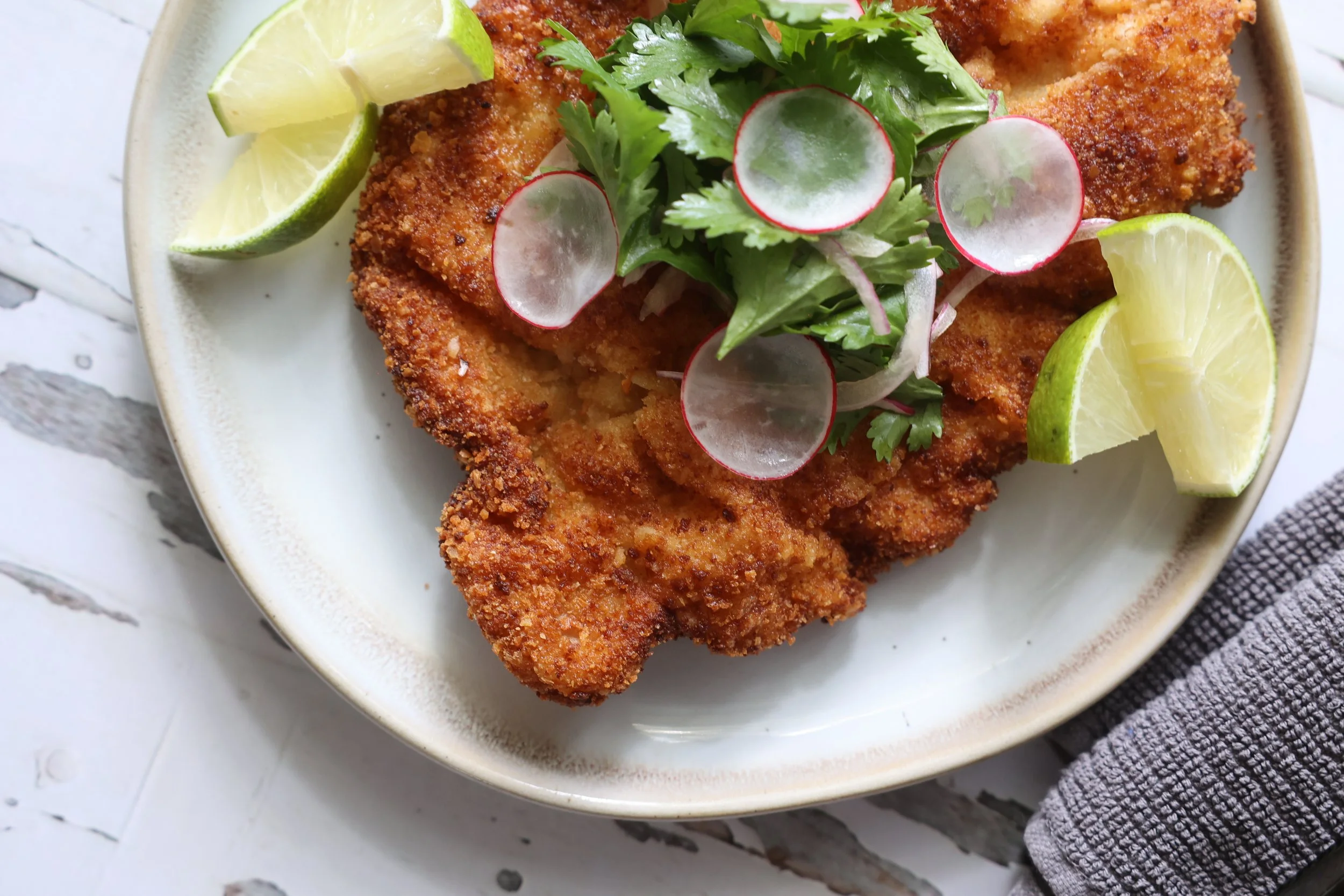
Pork Schnitzel
Pork schnitzel has a long, proud history of being exactly what it looks like: a thin piece of pork, flattened with mild aggression, breaded, and fried until nobody is mad about it anymore. While schnitzel is most famously associated with Austria (which will insist it was invented there and then immediately argue about veal), the pork version spread because pigs are plentiful, practical, and generally willing to participate in culinary traditions. Over time, pork schnitzel became the democratic schnitzel—less aristocratic than veal, more reliable on a Tuesday night, and perfectly content with a lemon wedge as its only flourish. It exists not to surprise you, but to quietly confirm that frying things was, historically, a very good idea. This is a riff with some style on the traditional making it “not so traditional”. The sherry vinegar and lime adds a Spanish flair while staying true to simple flavors complimenting the pork.
Ingredients
1 pound boneless prime pork loin cut into 4oz slices
salt and pepper
1 cup breadcrumbs or panko if you got it
1/2 cup flour
4 whole eggs
1 fluid ounce water
1 quart neutral high heat oil such as canola, grapeseed or peanut.
Italian Parsley, leaves picked
Radish, shaved thin
Pedro Ximanez Sherry Vinegar, this really makes a difference
shaved shallot
Lime wedges for garnish
Servings 4
Prep time 15 minutes
cook time 5 minutes
Tools
cutting board
sharp chefs knife
meat tenderizer
plastic wrap
3 bowls
dutch oven or large pot for frying
high heat insta read thermometer
whisk
mandolin for shaving shallots and radish (optional)
wire roasting rack on sheet pan
Method
Take pork loin and slice into approximately 4oz rounds. Place each round onto a sheet of plastic wrap making sure to leave space around each piece. Lay another sheet of plastic wrap over the top of the pork and using the meat tenderizer, gently but firmly pound until each peice is about 1/4 inch thick evenly. Remove plastic wrap and season each piece with salt and pepper. Set aside in refrigerator until ready to use.
Heat oil in a dutch oven or large pot over medium high heat until temperature reaches 350 degrees. Make sure to only fill the vessel with 1/4 of its volume in oil. Hot oil can bubble over and cause a giant mess or even worse a fire or serious burns. Be safe people!
While the oil is heating get your breading station ready. Take 3 bowls and fill as follows. All purpose flour in the first bowl. Eggs whisked with water in the second bowl. Whisk very well or use a blender to do it for you. In the third bowl place your breadcrumbs. Now bread your pork by following this process.
Place seasoned pork piece in flour bowl and coat well. Lift and shake any excess flour off.
Lay into whipped egg mixture and coat well. Lift and drain excess. If dry flour areas are present, re dunk the pork until coated evenly
Drop into bread crumbs and coat well, pressing bread crumbs into pork. Check to make sure its coated and drop into 350 degree fryer.
Cook 2 minutes or until internal temperature is at least 145 degrees. Pork can be cooked under, it’s not the 1950’s and Trichinosis is very very rare. If you are concerned at all, just take it all the way to 165 degrees.
Remove and place on wire rack on top of sheet pan to drain, rest and crisp up.
To garnish, toss picked parsley, shallots, and radish in the sherry vinegar. Place on top of schnitzel and serve with lime wedges.